Article
Cross-border Stablecoin Payouts: Send Stablecoin Payments Without Managing Crypto

The Important Bits
Cross-border stablecoin payments let organizations send international payments that settle in minutes, operate 24/7, and cost a fraction of traditional rails, all without holding or managing cryptocurrency.
Common use cases include global payroll, vendor settlements, affiliate payouts, and marketplace disbursements, particularly where FX costs and settlement delays create operational drag.
With a provider like BitPay, finance teams can fund stablecoin payments in fiat, deliver in stablecoins, and maintain full compliance without building blockchain infrastructure in-house.
Your team can deploy software across continents in seconds and onboard a contractor in another country before lunch. But sending that contractor their payment? That still takes days.
Cross-border payouts remain one of the most stubborn bottlenecks in global operations. Settlement windows take multiple business days, foreign exchange markups and intermediary fees consume 2% to 7% of every transaction, and payment processors shut down on weekends and holidays. For finance teams managing a global workforce or vendor network, these delays create real operational obstacles.
Cross-border stablecoin payouts solve these problems. By moving value on blockchain rails using digital assets pegged to fiat currencies, organizations can send cross-border payments that settle in minutes, run around the clock, and cost a fraction of what legacy rails charge.
This article covers what stablecoin payouts are, how they compare to traditional channels, and crypto for cross-border payments without ever touching cryptocurrency.
What are stablecoin payouts?
Stablecoins are digital assets pegged to a fiat currency, typically the U.S. dollar. USDC, for example, maintains a 1:1 peg to USD, meaning one USDC is always worth one dollar. Unlike Bitcoin or Ethereum, stablecoins are designed to avoid price volatility, which makes them a practical option for cross-border payments at any scale. In a stablecoin payout, value moves between digital wallets on a blockchain network, settling in minutes with funds always available, and with no dependency on banking hours or intermediary institutions.

Organizations can manage this process directly by funding and operating their own wallet, but that comes with operational overhead: private key security, compliance obligations, and ongoing wallet management. Many organizations choose instead to work with a cryptocurrency payment processor like BitPay that handles fiat to stablecoin conversion and delivery on their behalf This hands-off approach means your team can send stablecoin payouts without ever holding cryptocurrency or managing blockchain infrastructure.
Cross-border payments with stablecoins vs legacy payments
Here's how stablecoin payouts compare to traditional cross-border payment channels across the metrics that matter most to finance and operations teams.
Stablecoin payouts | Legacy payments | |
|---|---|---|
Speed | Minutes; blockchain confirms in real time | Several business days |
Availability | 24/7/365; no banking hours or holidays | Business hours only; varies by region and time zone |
Fees | 1-2% flat fee | 2-7% including FX markup and fixed fees |
Geographic reach | Global* | Global, but limited in underbanked or capital-controlled markets |
Volatility risk | Most commonly pegged to USD or EUR | Low volatility, though FX conversion can impact |
Access | Any recipient with a digital wallet can receive stablecoin payments | Recipient requires a bank account |
Foreign exchange | None; sent and received in pegged stablecoin | Fiat conversion for international transactions |
Common use cases: where stablecoin payouts solve problems
Cryptocurrency payouts are particularly effective in scenarios where traditional payment rails create delays or prohibitive costs. Here are some of the most common applications.
Global employee and contractor payroll: Remote teams often span markets where ACH transfers are slow, expensive, or entirely unavailable. Stablecoin payouts let organizations pay employees and contractors with cryptocurrency almost anywhere in the world at high speed and for low cost, regardless of local banking infrastructure.
Vendor and supplier settlements: Settling B2B invoices across multiple currencies typically means absorbing FX markups and waiting days for confirmation. Cross-border stablecoin payouts simplify this by locking in exchange rates at transaction time and delivering settlement in minutes.
Affiliate and partner payouts: Affiliate and referral programs often involve high-volume payouts to recipients spread across dozens of countries. Stablecoin rails let teams process mass payouts in a single batch without navigating a patchwork of regional banking requirements.
Marketplace and gig platform disbursements: Platforms that pay sellers or workers in multiple countries typically juggle several currencies and banking connections simultaneously. Stablecoin payouts consolidate this into a single integration, reducing operational complexity while expanding geographic reach.
Intercompany transfers: Moving funds between global subsidiaries, regional offices, and departments often involves correspondent banks, multi-day settlement windows, and repeated FX conversions that erode treasury efficiency. Stablecoin transfers let multinational organizations reallocate capital between entities in minutes at predictable cost, streamlining treasury operations and intercompany reconciliation.
Customer cash outs: Traders, players, and creators increasingly expect the option to withdraw earnings in cryptocurrency. Stablecoin payouts give platforms a straightforward way to offer crypto cash outs without building and maintaining their own blockchain infrastructure.
How to integrate cross-border stablecoin payouts (without touching crypto)
Integrating stablecoin payouts into your cross-border payment operations doesn't require blockchain expertise, wallet management, or cryptocurrency on your balance sheet. With the right provider, the process is as easy as integrating any other payment method.
Choose a stablecoin payout provider
Look for a partner with a proven track record in crypto payments and the compliance infrastructure to match. If your organization doesn't want to manage cryptocurrency directly, confirm that payouts can be funded entirely in fiat currency and that you won't need to own or operate a wallet. Multi-network and multi-currency support is also worth prioritizing so payouts can be tailored to the preferences of your recipients. Need help determining which partner is right for you? Get our list of 50 questions to ask payment processors.
Complete onboarding and business verification
Expect standard KYC requirements and business documentation during onboarding. Reputable providers like BitPay already have compliance infrastructure in place, including identity verification, AML monitoring, and transaction screening, so your team isn't building that layer from scratch.
Configure your recipient list and payout preferences
Recipients provide a wallet address and select how they want to be paid, including their preferred cryptocurrency and blockchain network. This configuration is typically managed through a dashboard or during API setup.
Connect via API or use the dashboard
Depending on your team's needs, you can trigger payouts programmatically through an API integration or manage them manually through a no-code dashboard. Either approach delivers the same cross-border speed and cost advantages.
Fund in fiat, pay out in stablecoins
Initiate payouts from your bank account in local currency. Your provider handles the conversion to stablecoin, on-chain delivery to the recipient, and produces a blockchain-recorded transaction log for every payout, giving your team a clear audit trail without touching crypto at any point.
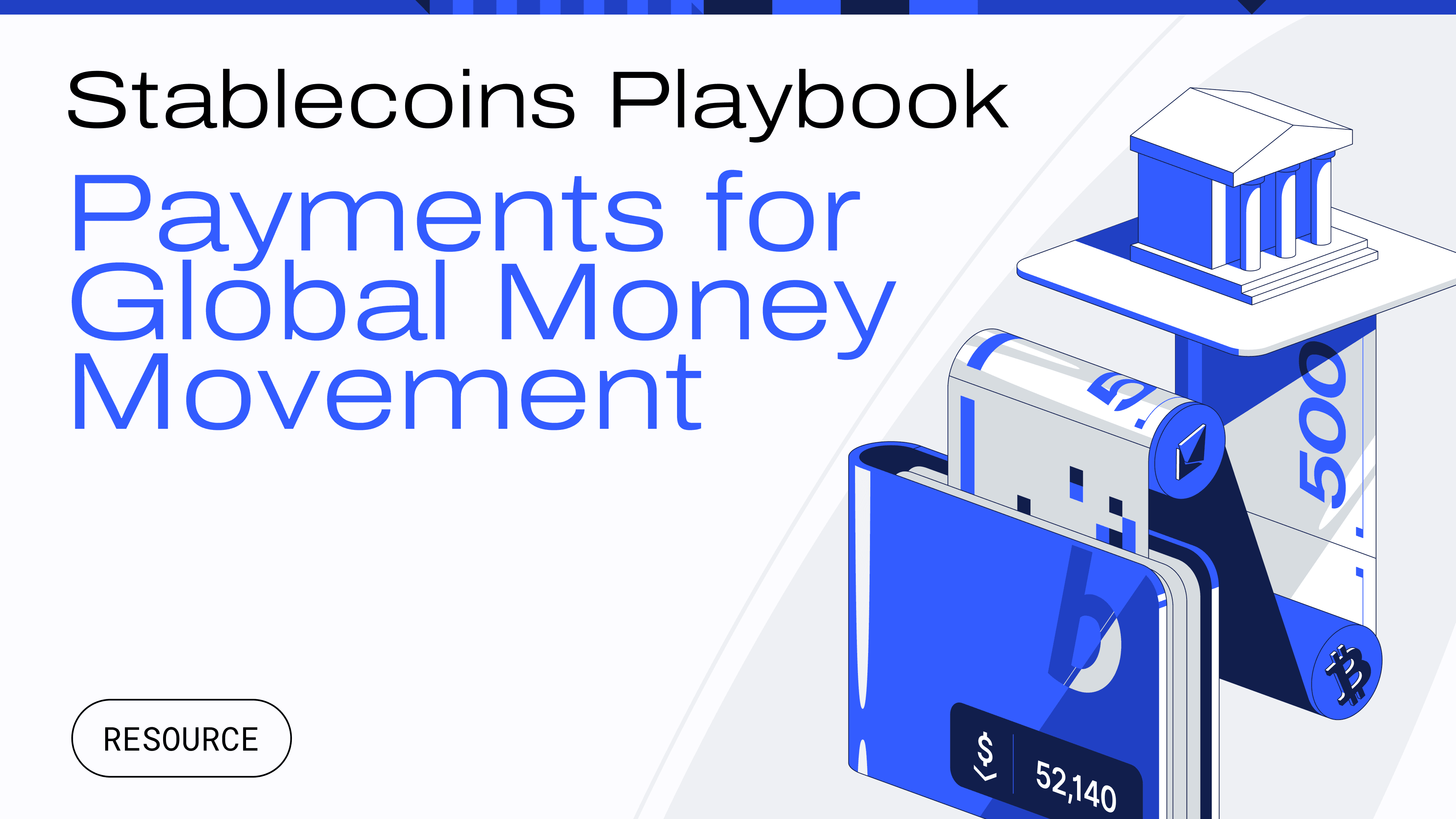
→ Get BitPay’s Stablecoin Playbook for a complete breakdown of integrating stablecoin payments
What are the best stablecoins for cross-border payments?
When evaluating the best crypto for cross-border payments, two stablecoins consistently lead the field. Based on BitPay's State of Stablecoins report, U.S. dollar–pegged USDC and USDT are the most widely used stablecoins for cross-border payments.
While the Ethereum network dominates in payment volume, Layer-2s networks, which offer faster confirmations and lower fees, are quickly gaining transaction share. Layer-2 networks such as Base, Arbitrum, and Polygon now drive 49% of all stablecoin transactions. Solana is also emerging as a network used to run stablecoin payments at speed.
Top coins for stablecoin payouts:
USDC: A US dollar–pegged stablecoin issued by Circle, backed 1:1 by cash and short-term US Treasuries held in regulated financial institutions.
USDT: Tether's US dollar–pegged stablecoin, the largest by market cap, issued by Tether Limited and backed by a mix of cash, Treasuries, and other reserve assets.
PYUSD: PayPal's US dollar–pegged stablecoin, issued by Paxos Trust and backed by cash, Treasuries, and similar cash equivalents, designed for use within PayPal/Venmo and on-chain.
EURC: Circle's euro-pegged stablecoin, backed 1:1 by euro reserves and intended as the euro counterpart to USDC.
Top networks for stablecoin payouts:
Ethereum: The largest and most established blockchain for stablecoins, offering the deepest liquidity and strongest security but with higher transaction fees; best suited for larger cross-border transfers where reliability matters more than cost.
Polygon: A faster, cheaper network connected to Ethereum, with lower transaction fees, making it a popular choice for everyday remittances and merchant payments.
Arbitrum: A network built on top of Ethereum that keeps the same security but lower fees, making routine cross-border payments practical.
Optimism: Another network built on top of Ethereum with low fees, and the basis for a broader family of connected payment networks that can share liquidity with each other.
Base: Coinbase's payment-focused network, making it especially convenient for moving money between dollars and stablecoins across-borders.
Solana: A standalone high-speed network that settles transactions in under a second for a fraction of a cent.
Are stablecoin payouts right for your organization?
Not every business will need to use stablecoins for cross-border payments, and not every team is ready to integrate them today. That said, the operational advantages are hard to ignore for organizations that fit the profile.
The strongest case is for companies making high-volume cross-border payments to recipients spread across multiple countries, particularly where FX costs and multi-day settlement windows are consistent pain points. If your team is already managing payroll, vendor settlements, or affiliate payouts across several currencies, cross-border stablecoin payments can reduce cost and complexity.
For purely domestic payouts or low-volume operations, traditional rails may still be the practical choice. The overhead of integrating a new payment channel may not justify the return at a smaller scale.
In practice, many businesses will run both side by side, especially as cryptocurrency adoption continues to grow. If the use cases align, consider launching a pilot program focused on a single payout segment (affiliate payouts or offshore contractors, for example) and expanding as your team grows comfortable with operations.
Send global stablecoin payments with BitPay - no crypto expertise required
BitPay has been processing blockchain payments since 2011, giving finance teams a proven, compliance-ready platform for cross-border stablecoin payouts.
No crypto management required
Send payments without holding or managing cryptocurrency. BitPay handles conversion and on-chain delivery so your team doesn't have to.
Global reach
Send cross-border payments to recipients anywhere in the world*, regardless of local banking infrastructure.
Regulated and compliant
BitPay verifies the identity of all payees with built-in KYC, AML, and transaction monitoring.
Low cost
Pay fewer fees than traditional remittance and payout channels, with transparent, predictable pricing.
Automated payments
Pay out programmatically via API or push payouts manually through the dashboard, whatever fits your workflow.
Flexible payment options
Fund payouts locally in fiat and deliver globally* in top cryptocurrencies to any wallet, including USDC and USDT, which account for 90% of the stablecoin market.
*Restrictions and geographic limitations may apply
*Terms and conditions apply; certain industries may be restricted and/or require additional review by BitPay before onboarding.
Note: All information herein is for educational purposes only, and shouldn't be interpreted as legal, tax, financial, investment or other advice. BitPay does not guarantee the accuracy, completeness, or usefulness of any information in this publication and we neither endorse, nor are we responsible for, the accuracy or reliability of any information submitted or published by third parties. Nothing contained herein shall constitute a solicitation, recommendation, endorsement or offer to invest, buy, or sell any coins, tokens or other crypto assets. BitPay is not liable for any errors, omissions or inaccuracies. For legal, tax, investment or financial guidance, a professional should be consulted.